

Can Poor Posture Cause Back Pain?
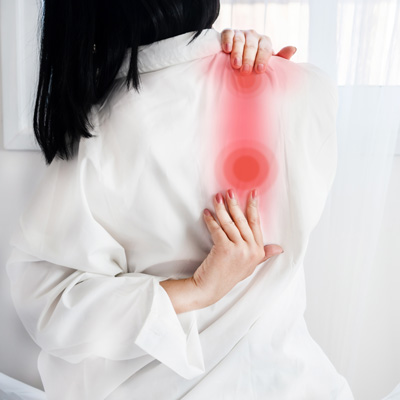
You slouch at your desk for eight hours. Your head leans forward while scrolling through your phone. Your shoulders round forward while driving. Then you wonder why your back constantly aches.
The answer to can poor posture cause back pain is an unequivocal yes. But it’s not just about “sitting up straight” – it’s about biomechanical forces, spinal loading, and structural changes that develop over months and years.
Let’s break down exactly how poor posture creates back pain and what you can do to fix it.
4 Examples of How Poor Posture Triggers Back Pain
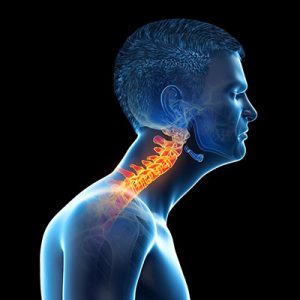
1. Forward Head Posture (Tech Neck)
Your head weighs about 10-12 pounds in a neutral position. But for every inch your head moves forward, it effectively adds 10 pounds of stress on your neck and upper back.
The math of forward head posture:
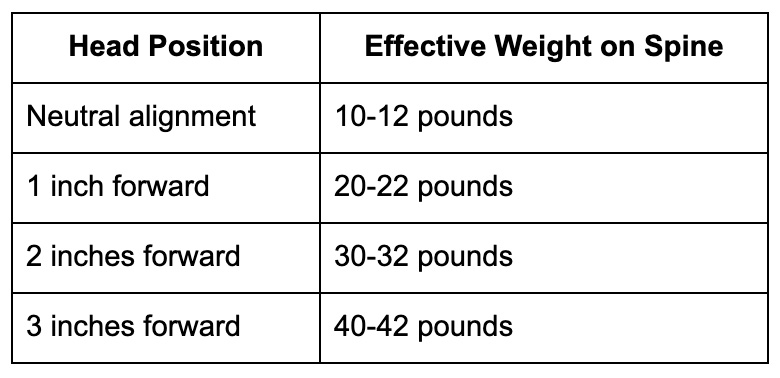
Most people who ask can poor posture cause back pain have their head positioned 2-3 inches forward while working. That’s 30-40 pounds of constant stress on structures designed to handle 12.
Forward head posture consequences:
- Chronic upper back and neck muscle strain
- Accelerated cervical disc degeneration
- Tension headaches from suboccipital muscle overload
- Rounded shoulders from compensatory changes
2. Anterior Pelvic Tilt
Anterior pelvic tilt – when your pelvis tips forward – creates excessive curve in your lower back (hyperlordosis). This “hollow back” posture compresses lumbar facet joints and stresses spinal ligaments.
What creates anterior pelvic tilt:
- Prolonged sitting tightening hip flexors
- Weak abdominal muscles
- Tight lower back muscles
- High heels shifting pelvis forward
How it causes back pain:
- Facet joints compress under abnormal loading
- Disc pressure increases in posterior segments
- Spinal ligaments stretch beyond normal range
- Chronic inflammation develops in joints
Self-check for anterior pelvic tilt:
Stand sideways in front of a mirror. Does your lower back have an exaggerated arch? Can you fit more than two fingers between your lower back and a wall when standing against it? Both indicate anterior tilt.
3. Hyperkyphosis (The Mid-Back Hump)
Excessive rounding of the upper back – hyperkyphosis – doesn’t just affect appearance. It compresses your ribcage, restricts breathing, and creates chronic mid-back pain.
Hyperkyphosis development:
- Prolonged slouched sitting
- Upper back muscles stretch and weaken
- Chest muscles shorten and tighten
- Vertebrae begin remodeling into wedge shapes
- Permanent structural curve develops
Health consequences beyond pain:
- Reduced lung capacity (up to 30% in severe cases)
- Digestive issues from organ compression
- Balance problems from shifted center of gravity
- Increased fall risk in older adults
4. Uneven Hips (Pelvic Obliquity)
Crossing your legs habitually, carrying a bag on one shoulder, or standing with weight on one leg creates pelvic obliquity – uneven hip positioning.
The domino effect:
- Pelvis tilts to one side
- Sacroiliac (SI) joints misalign
- One side compresses, opposite side stretches
- Muscles compensate asymmetrically
- One-sided lower back and hip pain develops
Common signs of pelvic obliquity:
- Pants hem uneven
- One shoulder sits higher
- Belt or waistband twists
- One-sided lower back pain
- Hip pain worsening with walking
At our chiropractor Virginia Beach office, we photograph patients’ posture from behind. The asymmetry often shocks people who’ve unconsciously adapted to crooked positioning.
The CBP Solution: Restoring Your Spine’s Natural Curves
Why Standard Physical Therapy Often Fails Posture
Standard physical therapy focuses on strengthening muscles and increasing flexibility. While valuable, these approaches often fail to correct long-standing postural problems because they don’t address structural changes.
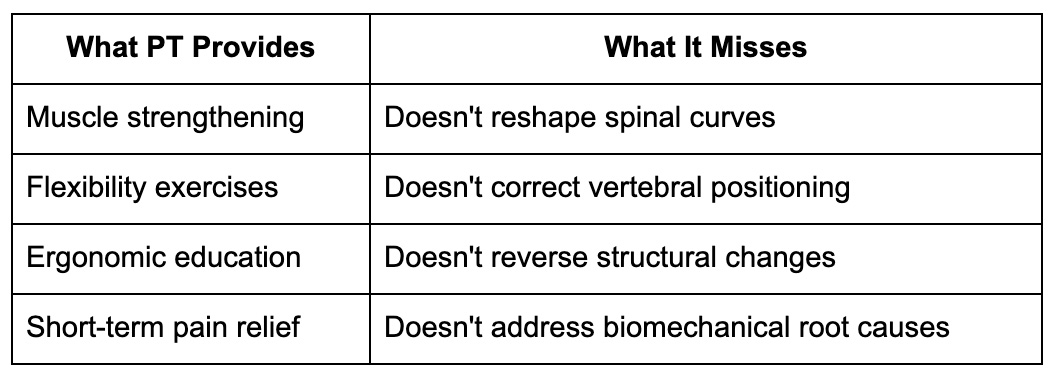
You can strengthen muscles all you want – but if your spine has structurally adapted to poor posture through bone remodeling and ligament changes, exercises alone won’t fix it.
Using Spinal Traction and Mirror Image Adjustments to Reshape the Spine
Chiropractic BioPhysics (CBP) takes a different approach: actually reshaping spinal curves using mirror-image corrections and specific traction protocols.
- Precise measurement:
- Digital postural photos from multiple angles
- X-ray analysis measuring exact curve deviations
- Computerized comparison to ideal alignment
- Mirror-image adjustments:
- Forces applied opposite to postural distortion
- Specific corrections to misaligned vertebrae
- Progressive realignment over multiple visits
- Traction protocols:
- Denneroll devices for cervical curve restoration
- Fulcrum blocks for thoracic correction
- Lumbar traction for lower back realignment
- Daily home exercises reinforcing corrections
- Progress tracking:
- Follow-up photos and measurements
- Objective documentation of improvements
- X-ray verification of structural changes
Your Posture Is Your Health’s Foundation
So, can poor posture cause back pain? Absolutely – through measurable biomechanical forces, structural adaptations, and chronic tissue stress.
The good news: posture isn’t destiny. With proper structural correction using CBP protocols, even years of postural damage can improve.
At ChiroSolutions Center, we specialize in corrective care that addresses the biomechanical root causes of back pain – not just symptom management. We measure your posture objectively, track improvements with follow-up imaging, and create customized protocols for lasting correction.
Schedule a comprehensive digital posture analysis today. We’ll show you exactly how your posture is affecting your spine, explain the biomechanical forces creating your pain, and outline a clear path to structural correction.
See more: Can Bad Posture Cause Chest Pain?
Frequently Asked Questions
Can a chiropractor fix years of bad posture?
Yes – but it requires commitment to a correction protocol, not just occasional adjustments. Years of poor posture create structural adaptations (bone remodeling, ligament changes) that take months to reverse. With consistent CBP care including traction and specific exercises, most patients see significant improvement within 3-6 months.
Is my posture causing my headaches?
Likely. Forward head posture creates chronic tension in suboccipital muscles (base of skull), triggering tension-type headaches. It also compresses upper cervical nerves that can refer pain to the head. If your headaches worsen during work hours or after screen time, posture is probably a major factor.
Does poor posture cause permanent damage?
If left uncorrected for decades, yes – poor posture accelerates spinal degeneration, creates permanent bone spurs, and can cause irreversible disc damage. However, even long-standing postural problems can improve significantly with proper intervention. The key is addressing them before structural damage becomes too advanced.

Similar Posts




Free Initial Consultation
Stop living with pain and discomfort. Contact us to schedule your free initial appointment.
Request an appointment online, or call:
757-271-0001