

Cervical Kyphosis: Symptoms, Causes and Treatment Options
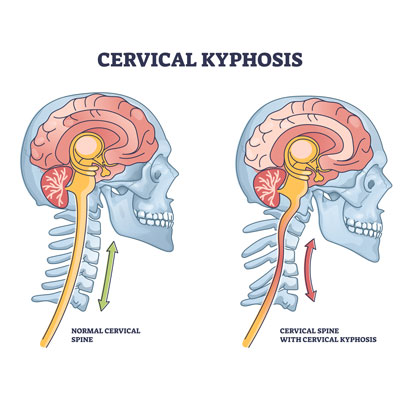
Cervical kyphosis occurs when the neck loses its normal inward curve and becomes unusually straight or begins to curve in the opposite direction. Some people have few noticeable problems, while others develop neck pain, stiffness, changes in posture, or symptoms related to pressure on the nerves or spinal cord.
Because the causes and severity can vary widely, finding an abnormal neck curve does not automatically tell us what treatment is needed. At ChiroSolutions Center in Virginia Beach, we look at symptoms, posture, spinal alignment, and movement to determine whether conservative care may be appropriate.
What is cervical kyphosis?
The cervical spine is the part of your spine that runs through your neck. When viewed from the side, a healthy cervical spine normally has a gentle inward curve called cervical lordosis.
With cervical kyphosis, this normal curve becomes reduced, straight, or reversed. The change can involve part of the cervical spine or a larger section of the neck.
These terms describe related but different alignment patterns and their progression:
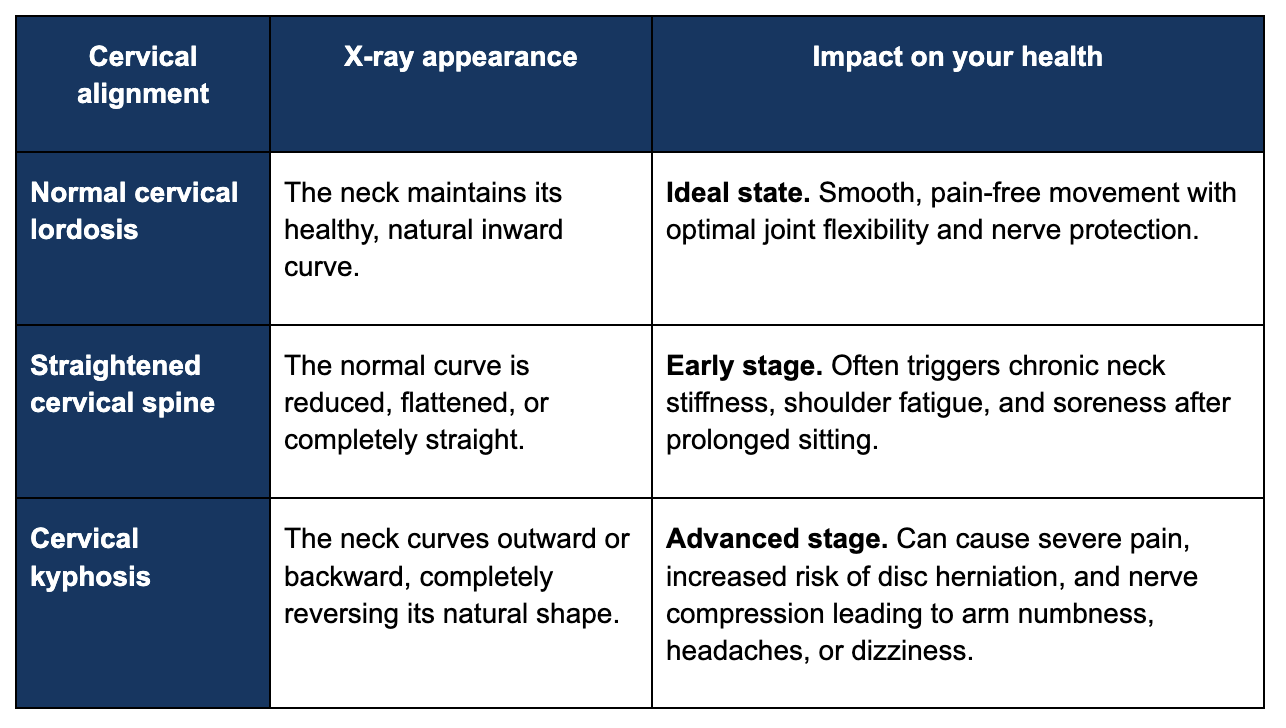
An abnormal curve does not always cause immediate symptoms. However, its long-term impact depends on critical factors such as the underlying cause, severity, spinal stability, and whether the nerves or spinal cord are being compressed.
What causes cervical kyphosis?
Degenerative changes
The discs and joints of the cervical spine can change with age. As discs lose height and the structures around them change, the normal alignment of the neck may also be affected.
Injury or trauma
An injury to the cervical vertebrae, discs, ligaments, or surrounding structures can change how the neck is aligned. Significant trauma requires medical evaluation because instability or neurological injury may also be present.
Congenital conditions
Some people are born with differences in the way the vertebrae form or develop. These structural changes can affect the normal cervical curve.
Previous cervical spine surgery
Certain spinal procedures can change how forces are distributed through the neck. In some cases, kyphosis can develop after surgery, including after procedures that remove parts of the vertebrae.
Other spinal conditions can also contribute to cervical kyphosis. This is why identifying the underlying cause is important before deciding how the condition should be managed.
What are the symptoms of cervical kyphosis?
Not everyone with cervical kyphosis experiences symptoms. When symptoms occur, they depend partly on the severity of the curve and whether nearby nerves or the spinal cord are involved.
Common symptoms may include:
- Neck pain or stiffness
- Reduced range of motion
- Shoulder or upper back discomfort
- Headaches
- Changes in head position
- Difficulty looking straight ahead in more severe cases
Neurological symptoms require more attention. These can include numbness or tingling in the arms or hands, weakness, poor hand coordination, balance problems, or difficulty walking.
These symptoms can occur for many reasons other than cervical kyphosis. An evaluation is needed to determine what is actually causing them.
Cervical kyphosis vs forward head posture
Cervical kyphosis and forward head posture are related to neck alignment, but they are not the same condition.
Forward head posture describes the position of the head relative to the shoulders. The head sits farther forward than its ideal position.
Cervical kyphosis describes the shape of the cervical spine itself. It involves a reduction or reversal of the normal inward curve.
A person can have forward head posture without having cervical kyphosis. This distinction is one reason posture alone cannot determine what is happening inside the cervical spine.
How is cervical kyphosis diagnosed?
Evaluation usually begins with your health history and symptoms. Your provider may ask about previous neck injuries, surgery, pain, numbness, weakness, and changes in mobility.
A physical examination may assess:
- Neck movement
- Posture and spinal alignment
- Muscle strength
- Reflexes and sensation
- Balance or coordination when needed
Imaging can provide additional information about the cervical curve and surrounding structures. X-rays can show spinal alignment and the position of the vertebrae. MRI may be used when the discs, nerves, spinal cord, or other soft tissues need to be examined. CT scans may provide more detailed information about the bones in certain cases.
Imaging findings should be considered together with symptoms and examination findings rather than viewed in isolation.
What are the treatment options for cervical kyphosis?
Treatment for cervical kyphosis depends on its cause, the degree of curvature, symptoms, spinal stability, and whether neurological structures are affected.
Conservative treatment
When the condition is stable and there are no signs that require surgical management, conservative care may be considered.
Depending on the individual, this may include appropriate exercises, physical therapy, activity changes, pain management, or other approaches designed to support mobility and function.
Some people may also be candidates for chiropractic or posture focused care. The goal should be based on the individual findings rather than assuming every abnormal cervical curve can or should be treated in the same way.
Chiropractic BioPhysics® and cervical alignment
Chiropractic BioPhysics® uses measurements of posture and spinal alignment as part of the evaluation and care planning process.
At ChiroSolutions Center, CBP principles may be used to identify mechanical and postural factors that could be contributing to a person’s symptoms. When conservative care is appropriate, treatment may include chiropractic adjustments, rehabilitative exercises, and other strategies selected according to the individual’s examination findings.
CBP is not appropriate for every case of cervical kyphosis. Significant trauma, spinal instability, structural abnormalities, or neurological involvement may require further medical evaluation before conservative care is considered.
Cervical kyphosis care in Virginia Beach
Cervical kyphosis can affect people differently, so treatment should be based on more than the appearance of the cervical curve alone. The underlying cause, symptoms, and effect on daily function all matter when deciding what type of care is appropriate.
If you are experiencing persistent neck pain, stiffness, or concerns about your cervical alignment, contact us to schedule an evaluation. We can help determine the appropriate next step based on your individual findings.
Frequently asked questions
Is cervical kyphosis the same as military neck?
Not exactly. Military neck commonly describes a cervical spine that has lost much of its normal inward curve and appears unusually straight. Cervical kyphosis refers to a curve that can progress beyond straightening and bend in the opposite direction.
Is cervical kyphosis the same as forward head posture?
No. Forward head posture describes where the head sits relative to the shoulders. Cervical kyphosis describes an abnormal change in the curve of the cervical spine itself.
Can cervical kyphosis cause neck pain?
Yes, cervical kyphosis can be associated with neck pain and stiffness, but some people have an abnormal cervical curve without pain. Other conditions can also cause similar symptoms.
Can cervical kyphosis cause numbness or tingling?
It can. Numbness or tingling may occur when nerve structures are affected. Progressive numbness, weakness, balance problems, or loss of coordination should be medically evaluated.
Can cervical kyphosis be treated without surgery?
Some cases can be managed with conservative treatment, depending on the cause, severity, stability of the spine, and symptoms. More severe cases involving instability, progressive deformity, or spinal cord compression may require evaluation for surgery.

Similar Posts




Free Initial Consultation
Stop living with pain and discomfort. Contact us to schedule your free initial appointment.
Request an appointment online, or call:
757-271-0001