
Is Scoliosis Genetic? What Research Shows, Family Risk Factors, and Treatment Options
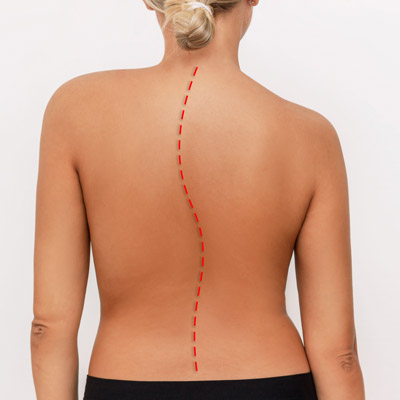
Is scoliosis genetic? Yes, genetic factors influence susceptibility to idiopathic scoliosis – the most common type – but inheritance isn’t straightforward or predictable. Family history increases risk without guaranteeing your child will develop curves, and genetics alone don’t determine severity or progression, making early detection and biomechanical intervention more important than genetic testing.
Is Idiopathic Scoliosis Genetic? What Science Currently Knows
Idiopathic scoliosis – curves with no identified cause – makes up 80-85% of all cases, particularly among adolescents.
Evidence of genetic susceptibility is substantial. Research by Ogilvie et al. in Clinical Orthopaedics and Related Research found that children with affected family members have 7-10 times higher risk than the general population.
No single gene causes scoliosis. Instead, researchers have identified multiple genetic variants that may increase susceptibility when combined with growth spurts, hormonal factors, and biomechanical stress.
Genetics alone cannot predict severity or progression. Two siblings with identical genetic susceptibility might develop vastly different curves – one mild, one severe – because progression depends on timing, growth rate, and biomechanical factors more than genes.
Types of Scoliosis and Their Genetic Relationship
Is scoliosis genetic across all types? The answer varies significantly.
Idiopathic Scoliosis
Most common in adolescents during growth spurts, idiopathic scoliosis shows the strongest family patterns.
Polygenic and multifactorial influences mean multiple genes plus environmental factors contribute. This explains why two siblings can have very different curves despite identical family history.
Why genetics matter here: They create vulnerability, but biomechanics determine whether curves develop and progress.
Congenital Scoliosis
Abnormal vertebral development before birth creates structural curves present from infancy.
Stronger developmental and genetic influence compared to idiopathic types, though specific genetic causes remain incompletely understood.
Why early imaging and intervention matter: These structural abnormalities often require different management than idiopathic curves.
Neuromuscular Scoliosis
Genetic neurological or muscular disorders like cerebral palsy, muscular dystrophy, or spina bifida cause secondary scoliosis.
Muscle imbalances from primary neurological conditions create asymmetric spinal loading, leading to progressive curvature.
Genetic link relates to underlying condition, not scoliosis itself.
Degenerative (Adult-Onset) Scoliosis
Age-related spinal breakdown creates new curves in adults with no childhood scoliosis history.
Biomechanics, not genetics, as primary driver. Disc degeneration, facet joint arthritis, and asymmetric spinal wear cause these curves.
Even if you had childhood scoliosis, adult-onset curves represent new mechanical problems, not genetic progression.
If Scoliosis Runs in My Family, What Is the Actual Risk?
Knowing your family has scoliosis understandably creates concern – but understanding actual statistics helps maintain perspective.
Increased likelihood with first-degree relatives:
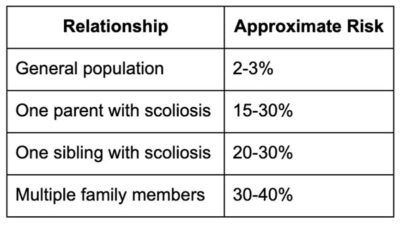
Why girls are affected more often: Adolescent idiopathic scoliosis occurs in both sexes but progresses to treatment-requiring severity 7-10 times more often in girls.
Family history increases monitoring needs – not fear. Regular screening allows early detection when curves are most responsive to conservative treatment.
Environmental, postural, and mechanical contributors matter significantly. Growth rate, activities, posture, and biomechanical factors interact with genetic susceptibility determining whether curves develop.
Why Genetics Do Not Determine Scoliosis Progression
Is scoliosis genetic in terms of progression? Partially, but biomechanics dominate outcomes.
Growth spurts and spinal loading create mechanical stress that can accelerate curves regardless of genetic factors. Rapid growth is when curves progress most aggressively.
Curve pattern and spinal imbalance matter more than genetics for progression risk. Thoracic curves >30 degrees and double curves show higher progression rates.
Why some genetic cases remain mild: Early detection plus proper biomechanical management can slow or stop progression even in children with strong family history.
Why others progress rapidly without early correction: Waiting until curves are large means missing the window when conservative treatment works best – regardless of genetic factors.
Early Detection Matters More Than Genetic Testing
There’s no reliable predictive genetic test for scoliosis currently available for clinical use. Research has identified genetic markers, but they don’t predict who will develop curves or how severe they’ll become.
Physical signs parents and adults should watch for:
- Uneven shoulder heights
- One shoulder blade more prominent
- Uneven waist or hip heights
- Clothes hanging unevenly
- Head not centered over pelvis
- Rib prominence when bending forward
Importance of posture and spinal asymmetry screening: Regular visual checks during growth years (ages 10-16) catch curves early when treatment is most effective.
Early-stage curves respond best to non-surgical care through corrective chiropractic, bracing, and rehabilitation. Large curves often require surgery.
Chiropractic BioPhysics® and Genetic Scoliosis
Is scoliosis genetic doesn’t change whether it responds to corrective care – biomechanics drive treatment success.
Why CBP® focuses on spinal structure, not symptoms:
Unlike temporary symptom relief, CBP® systematically corrects underlying structural problems through mirror-image adjustments, specific traction, and postural rehabilitation.
3D spinal correction principles address lateral curve, rotation, and sagittal plane distortions simultaneously – treating scoliosis as the three-dimensional problem it is.
Why genetic scoliosis still responds to biomechanical correction:
Regardless of whether genes created susceptibility, curves progress through mechanical forces. Correcting biomechanics reduces these forces, slowing or stopping progression.
Benefits for adolescents and adults:
Research by Morningstar et al. in Scoliosis and Spinal Disorders showed CBP® protocols reduced Cobb angles significantly in both adolescent and adult patients – proving that addressing biomechanics works regardless of genetic factors.
As a chiropractor Virginia Beach families trust for scoliosis management, I’ve watched countless children with strong family history achieve excellent outcomes through comprehensive CBP® care.
FAQs
Is scoliosis more common in girls?
Yes. While both sexes can develop scoliosis, girls have 7-10 times higher risk of curves progressing to severity requiring treatment.
Can scoliosis skip generations?
Yes. Genetic traits don’t necessarily express in every generation. Grandparents and grandchildren might have scoliosis while parents don’t.
Should children with family history be screened earlier?
Yes. We recommend starting visual screening around age 8-10 for at-risk children and monitoring closely during growth spurts.
Is genetic testing useful for scoliosis?
Currently no. While researchers have identified genetic markers associated with scoliosis, no clinical test predicts who will develop curves or how severe they’ll become.
Final Thoughts
Is scoliosis genetic? Yes, genetics create susceptibility – but they don’t determine your child’s or your outcome.
Genetics may load the gun, but biomechanics pull the trigger and we can absolutely influence biomechanics. Your family history of scoliosis doesn’t have to become your child’s future. Early intervention changes everything.
At ChiroSolutions Center, we help families move from fear about genetic risk toward empowerment through early detection and evidence-based treatment.
If scoliosis runs in your family or you’ve just been diagnosed, don’t wait to see “how bad it gets”. Schedule your comprehensive scoliosis evaluation today. We’ll assess your or your child’s spinal structure, explain realistic treatment options, and create a personalized plan addressing the biomechanical factors we can actually control.

Similar Posts



Free Initial Consultation
Stop living with pain and discomfort. Contact us to schedule your free initial appointment.
Request an appointment online, or call:
757-271-0001