

Neck Pain After Sleeping: Causes and Relief Tips

Neck pain after sleeping can make it difficult to turn your head or start your morning comfortably. You may wake up with stiffness, muscle tension, or discomfort that gets worse when you move.
Poor sleeping positions, inadequate pillow support, and muscle strain are common causes. At our chiropractic center in Virginia Beach, we help patients understand neck discomfort and explore personalized care options.
Common causes of neck pain after sleeping
Neck pain after sleeping often occurs when your head and neck remain in an uncomfortable position for several hours. Muscle tension and existing neck conditions may also contribute.
Poor sleeping positions that strain your neck
Sleeping on your stomach requires turning your head to one side for long periods. This can strain your neck muscles and cause morning stiffness.
Even sleeping on your back or side may cause discomfort if your head is tilted too far forward, backward, or sideways.
Using the wrong pillow or mattress
A pillow that is too high or too flat may place your neck in an awkward position.
For example, a high pillow can push your head forward when sleeping on your back. A thin pillow may allow your head to tilt downward when sleeping on your side.
A mattress that provides uneven support can also affect your sleeping position and contribute to discomfort.
Muscle strain and stiffness
Daily activities, prolonged sitting, and repeated neck movements can create muscle tension.
When these muscles remain tense overnight, you may wake up with:
- Neck and shoulder tightness.
- Pain when turning your head.
- Limited neck movement.
- Tenderness around the neck muscles.
Mild muscle strain often improves with gentle movement and home care.
Existing neck or spine conditions
Arthritis, disc problems, and nerve irritation may contribute to recurring morning neck pain.
If you experience neck pain and numbness in your hands, your symptoms may involve more than muscle stiffness and should be evaluated.
Effective home remedies for neck pain after sleeping
If your neck pain is mild and you have no concerning symptoms, simple home remedies may help reduce discomfort and improve movement.
Applying heat or cold therapy
Heat and cold can provide temporary relief from neck pain.
- Cold therapy: Apply a cold pack wrapped in a towel for 10 to 15 minutes to help reduce discomfort.
- Heat therapy: Use a warm towel or heating pad for 15 to 20 minutes to relax tight muscles.
Choose whichever feels more comfortable. Avoid applying extreme temperatures directly to your skin.
Performing gentle neck stretches
Gentle neck movements may help reduce stiffness and improve flexibility.
Try these exercises:
- Neck rotation: Slowly turn your head from side to side.
- Side neck tilt: Gently bring your ear toward your shoulder.
- Chin tuck: Move your chin backward while keeping your head level.
Avoid forcing your neck into painful positions. Stop if movement causes sharp pain, dizziness, or tingling.
Adjusting daily activities and neck movements
Keeping your neck completely still for long periods may increase stiffness.
Instead, maintain gentle movement and avoid activities that worsen your symptoms.
You can also:
- Take breaks from desk work.
- Keep your computer screen near eye level.
- Avoid looking down at your phone for long periods.
- Change positions regularly.
These habits may help reduce additional strain while your neck recovers.
Considering temporary pain relief options
Over the counter medications, such as acetaminophen or ibuprofen, may provide temporary relief.
However, these medications are not suitable for everyone. Follow product instructions and consult a healthcare professional if you have medical conditions, take other medications, or are unsure which option is appropriate.
How to prevent neck pain after sleeping
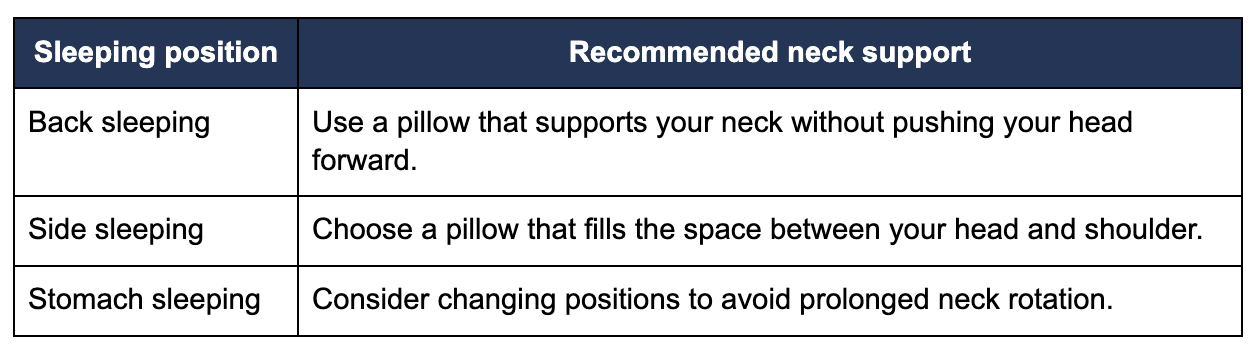
Preventing neck pain after sleeping starts with maintaining a comfortable sleeping position and providing proper support for your head and neck.
The table below compares common sleeping positions.
Choosing the right pillow for neck support
Your pillow should help keep your head and neck in a comfortable position.
Side sleepers often need a thicker pillow than back sleepers. Memory foam, latex, and other supportive materials may help, but no single pillow works best for everyone.
If your pillow regularly leaves your neck bent or unsupported, consider adjusting its height.
Practicing healthy bedtime habits
Daily habits can influence how your neck feels in the morning.
Prolonged screen use and poor workstation setup may increase muscle tension. Gentle movement, regular breaks, and a comfortable sleeping environment can help.
If screen use contributes to discomfort, improving forward head posture may also support better neck movement and postural awareness.
When should you seek medical care for neck pain?
Mild neck pain after sleeping often improves within several days. However, persistent or worsening symptoms may require professional evaluation.
Consider seeking care if you experience:
- Neck pain that frequently returns.
- Stiffness that limits daily activities.
- Pain spreading into your shoulder or arm.
- Tingling or numbness in your hands.
- Discomfort that does not improve with home care.
Seek urgent medical attention if neck pain occurs with fever and severe headache, new muscle weakness, difficulty walking, or serious symptoms following an injury.
How can chiropractic care help with recurring neck pain?
If you frequently experience neck pain after sleeping, a chiropractic evaluation may help identify musculoskeletal factors contributing to your discomfort.
At ChiroSolutions Center, we assess your symptoms, neck mobility, posture, and individual health needs before recommending care.
Depending on your examination findings, we may recommend:
- Neck mobility assessment: Evaluating your range of motion and movement limitations.
- Posture evaluation: Identifying habits that may contribute to muscle strain.
- Chiropractic adjustments: Using appropriate techniques for certain types of mechanical neck pain.
- Corrective exercises: Supporting neck movement, muscle function, and postural awareness.
Chiropractic care may help some people with mechanical neck pain, but it is not suitable for every condition. We tailor our recommendations to your symptoms and examination findings.
Managing neck pain after sleeping in Virginia Beach, VA
Neck pain after sleeping often results from muscle tension, sleeping positions, or inadequate neck support. Simple changes to your pillow, daily habits, and movement may help reduce discomfort.
If morning neck pain continues to affect your daily activities, professional evaluation may help identify contributing factors.
At ChiroSolutions Center in Virginia Beach, VA, we provide personalized chiropractic care focused on spinal function, mobility, and musculoskeletal comfort.
You can contact us to discuss your symptoms and determine whether chiropractic care may be appropriate for you.
Frequently asked questions about neck pain after sleeping
Why does my neck hurt only after I sleep?
Poor sleeping positions, inadequate pillow support, or muscle tension may cause neck pain after sleeping. Staying in an uncomfortable position for hours can increase morning stiffness.
How long does neck pain after sleeping typically last?
Mild neck pain from muscle strain often improves within a few days. If the pain persists, worsens, or occurs with other symptoms, seek medical evaluation.
Can a bad pillow cause ongoing neck pain?
Yes. A pillow that does not support your neck comfortably may contribute to recurring muscle strain and stiffness. However, persistent pain may have other causes.
What is the best sleeping position to avoid neck stiffness?
Sleeping on your back or side is generally more comfortable for your neck than sleeping on your stomach. Choose a pillow that supports a natural head and neck position.

Similar Posts





Free Initial Consultation
Stop living with pain and discomfort. Contact us to schedule your free initial appointment.
Request an appointment online, or call:
757-271-0001