

Can Poor Posture Affect Your Nervous System? (What Most People Don’t Realize)
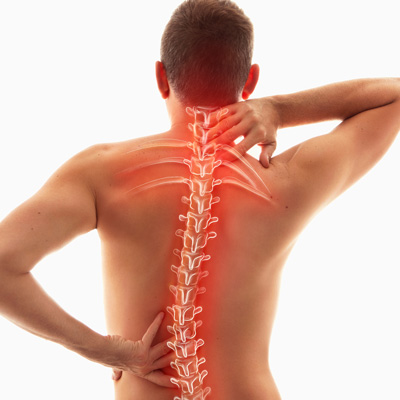
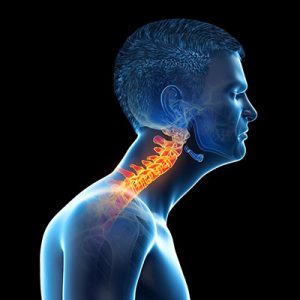
Here’s something most people never connect: the way you sit and stand can quietly affect how your nervous system works. The poor posture nervous system connection is one of the most overlooked health issues in today’s screen-heavy world.
Many of our patients come to us with nagging symptoms – fatigue, headaches, brain fog and have no idea their spine might be at the root of it all. Let’s break it down in plain, simple terms so you can take control of your health before things get worse.
Why Poor Posture and Nervous System Health Are Closely Connected
Think of your spine as a highway for nerve signals traveling between your brain and every part of your body. When your posture is off, that highway gets congested.
Research by Dr. Roger Sperry – found that 90% of the brain’s energy output is used to relate the physical body to gravity. When the spine is misaligned, that percentage shifts, and less energy is left for thinking, healing, and functioning normally.
In short, poor posture doesn’t just create aches. It can disrupt the very signals your nervous system depends on.
- Spinal misalignment places mechanical stress on surrounding nerves
- Compressed nerves send slower or incomplete messages to the brain
- Over time, the brain-body communication loop becomes less efficient
- This can trigger a cascade of symptoms that seem unrelated – but aren’t
7 Signs Your Nervous System May Be Affected by Poor Posture
We want you to be your own first line of defense. Here are the most common warning signs we see in our clinic:
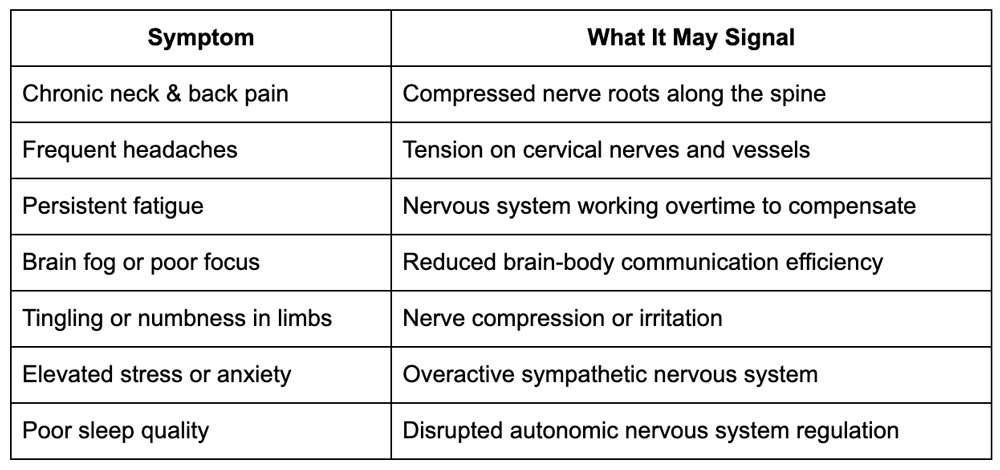
If you recognize three or more of these, your spine – not just your muscles – may need attention.
How Chiropractic Care Helps Restore the Poor Posture Nervous System Balance
So what can actually be done? This is where chiropractic care stands apart from temporary fixes like painkillers or ice packs. As a Chiropractor in Virginia Beach, VA, we focus on the root cause – not just the symptom.
What Is a Spinal Adjustment?
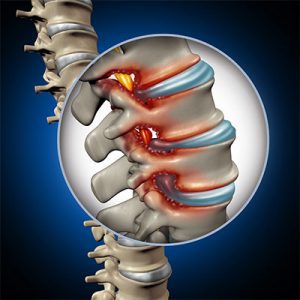
A spinal adjustment is a precise, hands-on technique designed to restore proper alignment to the vertebrae. When vertebrae shift out of position, they can pinch or irritate nearby nerves. An adjustment removes that interference so your nervous system has a clear, open pathway to function at its best.
Potential Benefits of Chiropractic Care for Nerve Function
- Reduced pressure on compressed nerves
- Improved brain-body communication through a restored spinal pathway
- Less muscle tension and chronic pain
- Better mental clarity and focus as nerve signaling improves
- More restful sleep as the autonomic nervous system rebalances
A 2019 study in Brain Sciences (Holt et al.) found that spinal adjustments produced measurable changes in brain activity, particularly in areas associated with sensory processing and motor control.
Why Addressing the Root Cause Matters
We could give every patient a pain reliever and send them home. But that doesn’t fix anything – it just mutes the alarm while the house keeps burning.
Chiropractic care works differently. We assess the whole spine, identify areas of nerve interference, and create a plan to correct them. The goal is lasting health, not short-term relief.
Simple Daily Habits to Improve Your Posture and Nervous System Health
Good chiropractic care works best when paired with better everyday habits. These don’t have to be complicated – small, consistent changes add up fast.
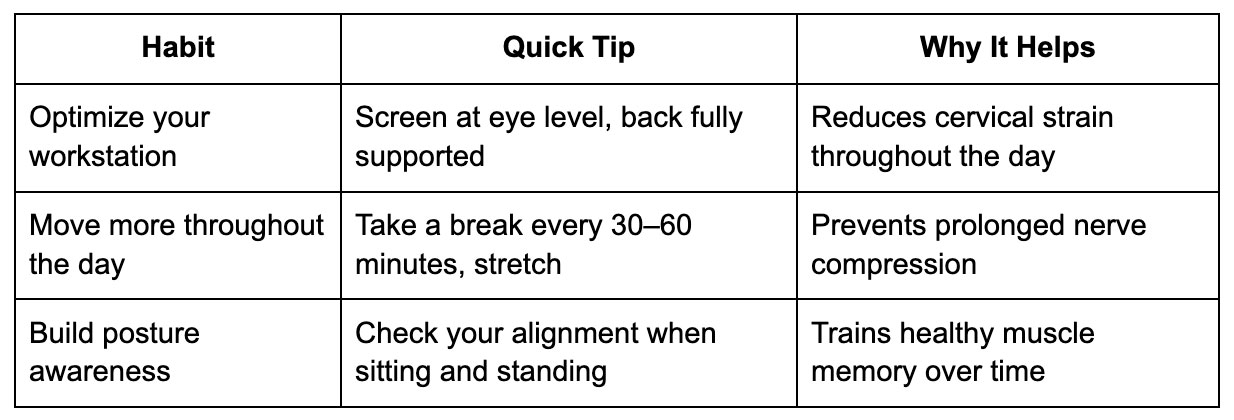
Keep in mind: these daily habits are supportive, not a substitute for professional care. If there’s already structural damage in your spine, better sitting habits alone won’t fully correct it. That’s why we always recommend a professional spinal assessment as your first step.
When Should You See a Chiropractor for Posture and Nervous System Issues?
We get this question a lot: “How do I know if it’s serious enough?” Our honest answer – don’t wait for it to become serious.
Signs You Shouldn’t Ignore
- Ongoing neck or back pain that doesn’t resolve with rest
- Numbness, tingling, or weakness in the arms, hands, or legs
- Frequent headaches with no other clear cause
- Unexplained fatigue, brain fog, or difficulty concentrating
- Poor sleep that lingers despite good sleep hygiene
Each of these can be an early signal that the poor posture nervous system connection is already causing problems. The earlier we catch it, the easier it is to correct.
Take the First Step Toward a Healthier Spine and Nervous System
The poor posture nervous system relationship is real, measurable, and something we see walk through our door every week. The good news? It’s also correctable – especially when caught early.
We believe everyone deserves a nervous system that functions without interference. Whether you’re dealing with chronic pain, nagging fatigue, or just a gut feeling that something isn’t right, a professional spinal evaluation is the smartest next step you can take.
Ready to find out what’s really going on?
- Book your spinal assessment at ChiroSolutions Center today
- Our team will evaluate your posture, identify nerve interference, and map out a clear care plan
- No guesswork. No one-size-fits-all solutions. Just real answers for your unique body.
Your posture is telling a story about your nervous system. Let us help you read it and rewrite it.
See more: Can Poor Posture Cause Headaches?

Similar Posts




Free Initial Consultation
Stop living with pain and discomfort. Contact us to schedule your free initial appointment.
Request an appointment online, or call:
757-271-0001