
Chiropractic Care vs Opioids: A Safer First Step for Back Pain

Back pain can wear you down, and it’s understandable to want fast relief. For many years, that often meant a prescription for opioids. Today, however, many leading medical organizations recommend considering conservative, non drug treatments first for many types of back pain. Chiropractic care is one of those recommended options.
This article explains the differences between chiropractic care and opioids, what current research says, and when each treatment may be the right choice for managing back pain.
The Problem with Opioids for Back Pain
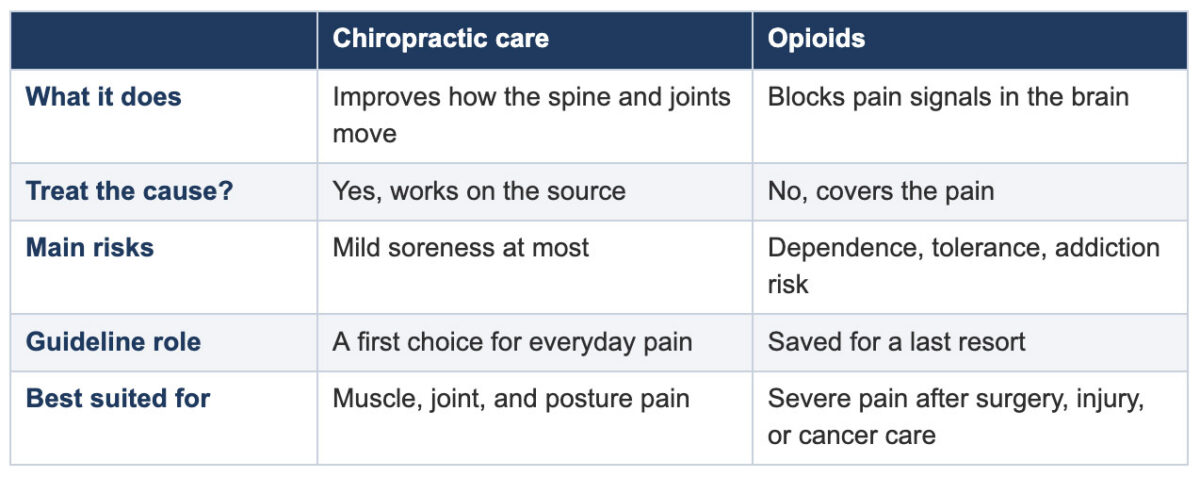
Opioids can relieve back pain quickly, but they do not address the underlying cause. They temporarily block pain signals, and the pain may return after the medication wears off.
Long term opioid use also carries risks, including dependence, opioid use disorder, and opioid overdose. For this reason, many clinical guidelines now recommend considering non drug pain treatments before prescription opioids whenever appropriate.
What Medical Guidelines Recommend First
Medical thinking about treating spine pain has changed. In 2017, the American College of Physicians published new guidelines in the journal Annals of Internal Medicine. These guidelines tell doctors and patients to try conservative care first for low back pain.
The list of first choices includes spinal manipulation, the core treatment a chiropractor provides. Only if those options fail should doctors consider medication, and opioids are named as a last resort.
This is a major shift. It means chiropractic care is not a fringe idea. It is an evidence-based option that mainstream medicine now recommends before pills.
Chiropractic Care vs. Opioids at a Glance
A Safe Alternative to Opioids Without the Risks
One of the biggest reasons people choose this path is safety. Chiropractic care is a non-drug approach, so it does not carry the risk of addiction or overdose that comes with opioid therapy. This is a key reason many experts now say chiropractic care is safer than opioids for everyday aches.
Serious side effects are rare. Most people feel only mild soreness after an adjustment, much like after a good workout.
The approach is also holistic. Along with adjustments, our team may guide you through exercises, posture tips, and daily habits that make it a gentle, drug free choice for many people.
How Chiropractic Care Treats Pain at Its Source
Find the cause. Instead of masking pain, chiropractic care looks for what is driving it. Many cases of back and neck pain come from joints in the spine that are stiff or out of place.
Restores movement. A doctor of chiropractic uses gentle, hands on adjustments, also called spinal manipulation, to bring proper motion back to those joints. As the spine moves better, pressure on nearby nerves and muscles eases, which brings real pain relief and better function in daily life.
Lasting relief. Because the care targets the source, the results tend to hold. You are not just switching off a pain signal, you are helping your body heal and move the way it should.
When to See a Doctor First
Chiropractic care fits many kinds of pain, but not every case. A few warning signs mean it is safer to see a medical doctor right away. Please get prompt medical care if your pain follows a bad fall or crash, or if it comes with any of these.
- Loss of bladder or bowel control.
- Leg weakness that keeps getting worse.
- A fever along with strong pain.
- Weight loss you cannot explain.
- A possible broken bone or infection.
These signs need a medical exam before any hands on care. A caring clinic will always point you toward the right help when something looks serious, and we do the same.
Safer Pain Relief at ChiroSolutions Center
At ChiroSolutions Center in Virginia Beach, we help you treat pain at its source, not with a prescription. Our founder, Dr. Samantha Coleman, holds an advanced certification in Chiropractic Biophysics, a method that focuses on correcting posture and spinal alignment for lasting relief. She is the only Advanced Certified CBP chiropractor in Hampton Roads.
Dr. Samantha Motley pairs hands on care with corrective exercise, so you build the strength that keeps pain away. Together, our team offers gentle adjustments, personalized treatment plans, and guidance for a healthier, more active life.
Common Questions About Chiropractic Care and Opioids
Is chiropractic care a safer choice than opioids?
For most everyday pain, guidelines point to gentle care first because it avoids the risk of addiction. The safest choice still depends on your exact diagnosis, so a careful exam always comes first.
How many visits will I usually need?
It varies from person to person, but many people with simple pain feel better within a handful of visits. We reassess as you go and shape the plan around your progress.
Does a chiropractic adjustment hurt?
Most people feel only mild pressure and then a sense of relief. A little soreness afterward is normal, much like the feeling after a good workout.
How soon might I feel a difference?
Many people notice some relief within the first week or two. Lasting change builds with steady care and the simple home exercises we recommend.

Similar Posts




Free Initial Consultation
Stop living with pain and discomfort. Contact us to schedule your free initial appointment.
Request an appointment online, or call:
757-271-0001