

Uneven Shoulders: Is It Posture or Scoliosis?
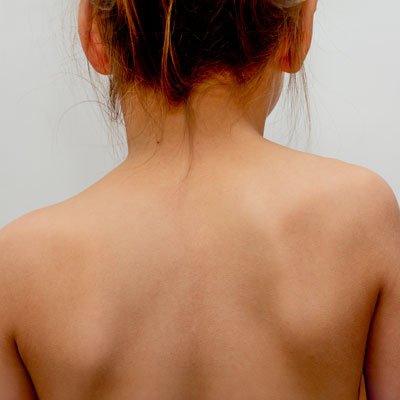
Noticing one shoulder higher than the other does not automatically mean you have scoliosis. Uneven shoulders may be related to posture, movement habits, muscle imbalance, or structural changes in the spine.
At ChiroSolutions Center in Virginia Beach, we assess posture, spinal alignment, and movement to help identify what may be contributing to the difference.
What are uneven shoulders?
Uneven shoulders simply means that one shoulder appears higher, lower, farther forward, or positioned differently from the other.
You may first notice it when:
- One shoulder looks higher in photos
- Shirt straps or necklines sit unevenly
- One shoulder blade appears more prominent
- Your waist or hips also look uneven
- Your body seems to lean slightly to one side
A small amount of asymmetry does not automatically mean something is wrong. The important question is why the shoulders are uneven.
For some people, the difference changes when they correct their position. For others, the asymmetry remains because it is connected to the structure and rotation of the spine.
What causes uneven shoulders?
Posture and daily habits
Your body adapts to the positions you use repeatedly.
Sitting with your weight shifted to one side, leaning on one arm at a desk, carrying a bag on the same shoulder, or consistently standing with more weight on one leg may affect how your shoulders rest.
These habits do not necessarily cause structural scoliosis. However, posture can create or make existing asymmetries in the body more noticeable.
Muscle and movement imbalances
The muscles around your neck, shoulders, upper back, and trunk work together to control your position.
Differences in strength, mobility, or muscle tension between the two sides can affect how your shoulders sit and move. Repetitive work, sports, previous injuries, and long periods in the same position may contribute to these patterns.
Scoliosis and structural differences
Scoliosis is a side to side curvature of the spine that measures more than 10 degrees on an X-ray. The vertebrae may also rotate as the spine curves.
This combination of curvature and rotation can change the position of the rib cage, shoulder blades, waist, and hips. Uneven shoulder height is one of the visible signs associated with scoliosis.
Uneven shoulders from posture vs scoliosis
Looking at your shoulders alone cannot confirm whether scoliosis is present. However, the overall pattern of asymmetry can provide useful clues.
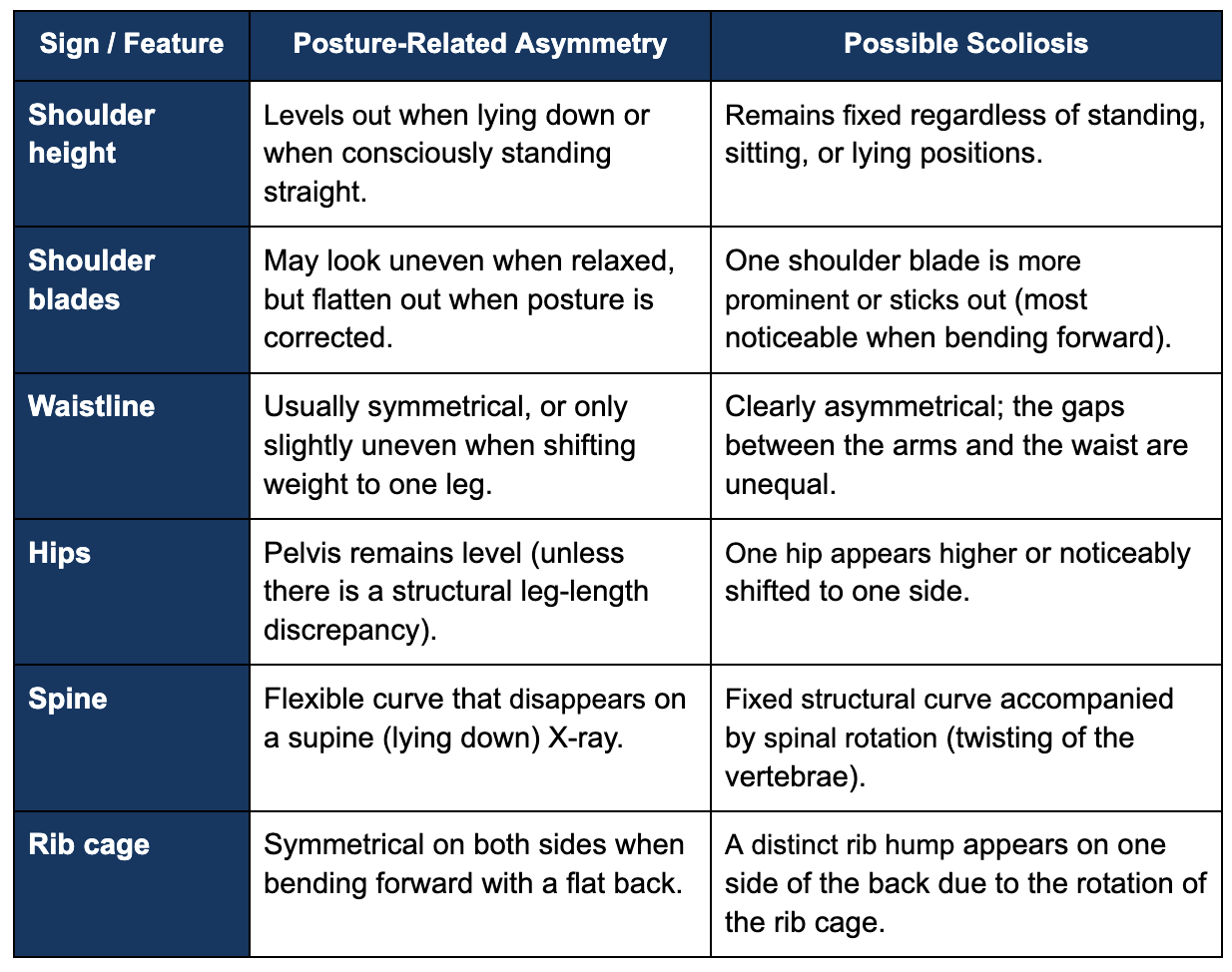
Uneven shoulders, a prominent shoulder blade on one side, uneven hips, or an asymmetrical rib cage may be signs of scoliosis. However, an accurate diagnosis requires a physical examination and, when appropriate, standing spinal X-rays to measure the curvature.
How scoliosis can cause uneven shoulders
Scoliosis is more than a simple sideways bend in the spine.
As the spine curves, the vertebrae can also rotate. That rotation can influence the rib cage and the position of the shoulder blades. Depending on the location and shape of the curve, you may notice:
- One shoulder sitting higher
- One shoulder blade sticking out more
- One side of the rib cage appearing more prominent
- An uneven waist
- One hip appearing higher
- The torso shifting toward one side
Uneven shoulders or a noticeably prominent rib cage can be signs of scoliosis, but the degree of visible asymmetry does not accurately reflect the severity of the spinal curve. For this reason, it is important to evaluate the underlying cause rather than relying solely on appearance. For mild curves, you can learn more about whether a chiropractor can help with mild scoliosis.
Can poor posture cause one shoulder to be higher?
Yes. Poor posture and repeated movement habits can make one shoulder higher than the other, but this is different from saying that poor posture causes structural scoliosis.
Imagine spending several hours each day leaning toward one side of your desk. Your trunk, neck, and shoulders repeatedly work in an asymmetric position. Over time, that pattern may influence muscle tension and the way you naturally hold your body.
The shoulder difference may be more flexible in these cases. Changing position or correcting the way you stand may reduce some of the visible asymmetry.
This is one reason we look at the entire postural pattern instead of focusing only on the shoulder itself. Similar postural changes may also contribute to back pain associated with poor posture.
Exercises that may support posture and shoulder balance
When mobility or muscle imbalance contributes to uneven shoulders, simple exercises may help improve movement and postural control.
1. Upper trapezius stretch
Sit or stand tall with your shoulders relaxed.
Slowly tilt your head so one ear moves toward the same side shoulder. Stop when you feel a gentle stretch along the opposite side of your neck.
Hold for 20-30 seconds, then repeat on the other side.
Avoid pulling hard on your head.
2. Shoulder blade squeezes
Sit or stand with your arms relaxed.
Gently bring your shoulder blades back and slightly down without lifting your shoulders toward your ears.
Hold briefly, relax, and repeat about 10 times.
3. Wall angels
Stand with your back against a wall and keep your movement comfortable.
Place your arms against the wall with your elbows bent. Slowly move your arms upward, then return to the starting position.
Aim for 8-10 controlled repetitions.
Do not force your shoulders or lower back against the wall if the position is uncomfortable.
4. Resistance band rows
Secure a resistance band in front of you.
Hold one end in each hand and gently pull the band toward your body while keeping your shoulders relaxed. Bring your shoulder blades together without shrugging.
Slowly return to the starting position and repeat 10-12 times.
These exercises may support mobility, strength, and postural control when those factors contribute to shoulder asymmetry. They cannot determine the cause of uneven shoulders or correct an underlying structural scoliosis curve.
How we evaluate uneven shoulders
Finding the cause of uneven shoulders requires looking at how the body is aligned and moves as a whole. At ChiroSolutions Center, we may assess:
- Shoulder height and shoulder blade position
- Head and trunk alignment
- Waist and hip symmetry
- Spinal alignment
- Range of motion and movement patterns
- Signs that may suggest a structural difference
When needed, on-site X-rays can provide a clearer view of the spine and help identify structural changes that may not be visible during a postural assessment.
We also use Chiropractic BioPhysics® to evaluate posture and spinal alignment. These findings help us determine which factors may be contributing to the asymmetry and develop an appropriate care plan.
Can uneven shoulders be corrected?
Whether uneven shoulders can improve depends on the underlying cause and how much of the asymmetry is flexible versus structural.
When the imbalance is posture related
Posture related asymmetry may improve when the contributing movement patterns are addressed. Care may include targeted exercises, mobility work, strengthening, and changes to daily habits that place uneven stress on the body.
The goal is to improve how the shoulders, upper back, and trunk move together rather than simply trying to force both shoulders into the same position.
When scoliosis is involved
When uneven shoulders are linked to structural scoliosis, the goal of care is broader than making the shoulders look level.
Management depends on the spinal curve, age, skeletal maturity, symptoms, and whether the curve is progressing. For appropriate cases, ChiroSolutions Center offers scoliosis focused care and custom ScoliBrace options.
Frequently asked questions about uneven shoulders
Does one shoulder higher than the other mean scoliosis?
No. One shoulder being higher can occur for several reasons. Scoliosis becomes more likely when shoulder asymmetry appears with other signs such as an uneven waist, prominent shoulder blade, rib prominence, or trunk shift.
Can poor posture cause uneven shoulders?
Yes. Repeated asymmetric sitting, standing, and movement patterns can influence shoulder position. However, poor posture is not considered a cause of structural scoliosis.
What exercises help uneven shoulders?
Stretching tight areas and strengthening the muscles that control the shoulder blades may support better posture and movement. The right exercises depend on the underlying cause.
Can uneven shoulders be corrected?
Posture related asymmetry may improve when the contributing movement and postural factors are addressed. Structural asymmetry from scoliosis requires an individualized approach based on the spinal curve and other clinical findings.
How can I tell if uneven shoulders are caused by scoliosis?
Shoulder height alone cannot diagnose scoliosis. A professional examination can assess the shoulders, shoulder blades, waist, ribs, and spine. X-rays may be used when scoliosis is suspected.
What to do if one shoulder is higher than the other
Uneven shoulders are a sign of asymmetry, not a diagnosis. Sometimes the difference comes from posture or movement habits. In other cases, it may be one part of a larger structural pattern such as scoliosis.
Understanding the cause helps determine whether posture changes, exercises, chiropractic care, scoliosis specific management, or another approach is appropriate.
At ChiroSolutions Center in Virginia Beach, we evaluate posture and spinal alignment before recommending care. If you have noticed that one shoulder consistently sits higher than the other, contact us to schedule an evaluation.

Similar Posts


Free Initial Consultation
Stop living with pain and discomfort. Contact us to schedule your free initial appointment.
Request an appointment online, or call:
757-271-0001